Waiting for the next fight – impressions of a trip to Israel
From Sacha Wigdorovits
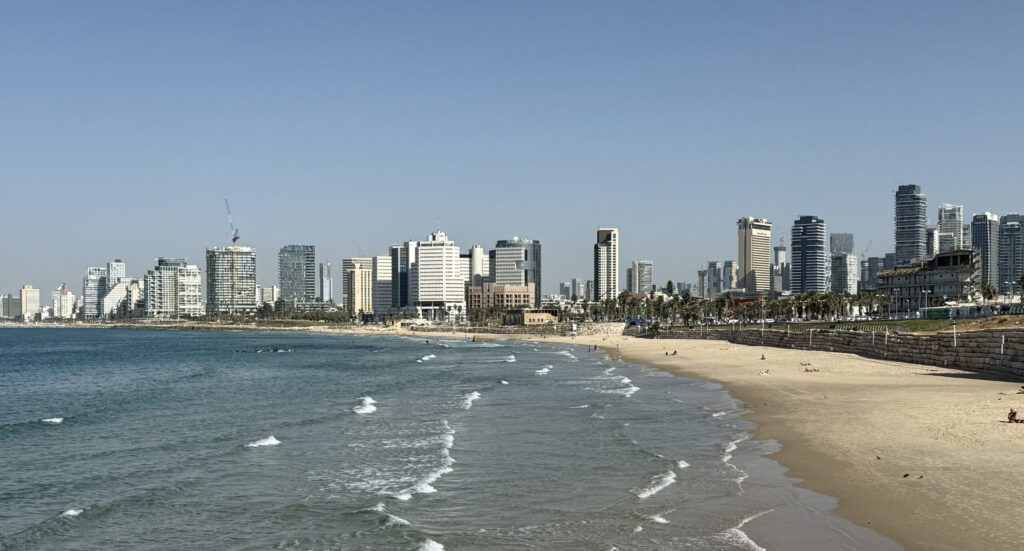
 Trügerische Normalität: Alltag an der Strandpromenade in Tel Aviv.

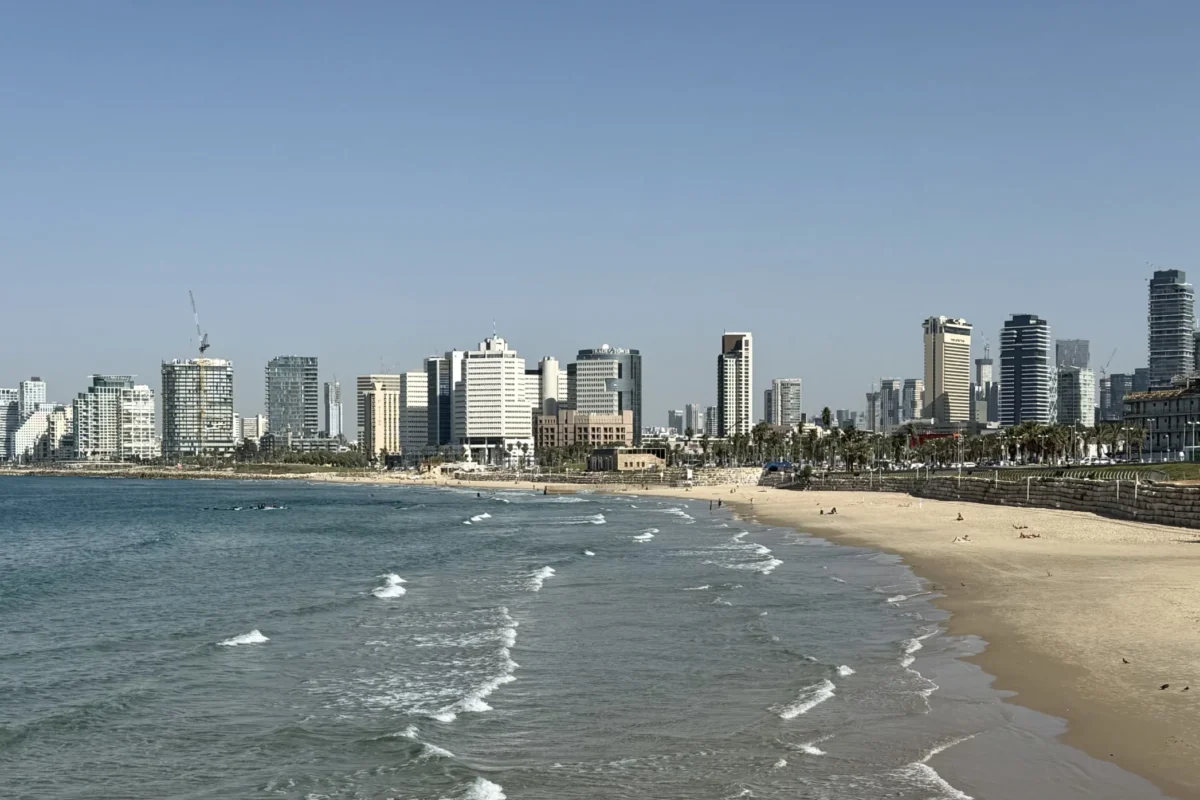

Walking along the waterfront in Tel Aviv, whether south towards Jaffa or north to the cafés, restaurants and stores near the old harbor, you imagine yourself in the midst of normality.
Women and men of all ages jog as usual with their headphones in their ears. Grandfathers take their grandchildren for a ride on their bikes. And dog owners let their four-legged friends romp around on the specially reserved beach, before washing the sand from their fur with shampoo in the dog shower. It is no coincidence that Leon de Winter called his latest novel, in which Tel Aviv plays a central role, “City of Dogs”. And there is no shortage of well-fed cats either.
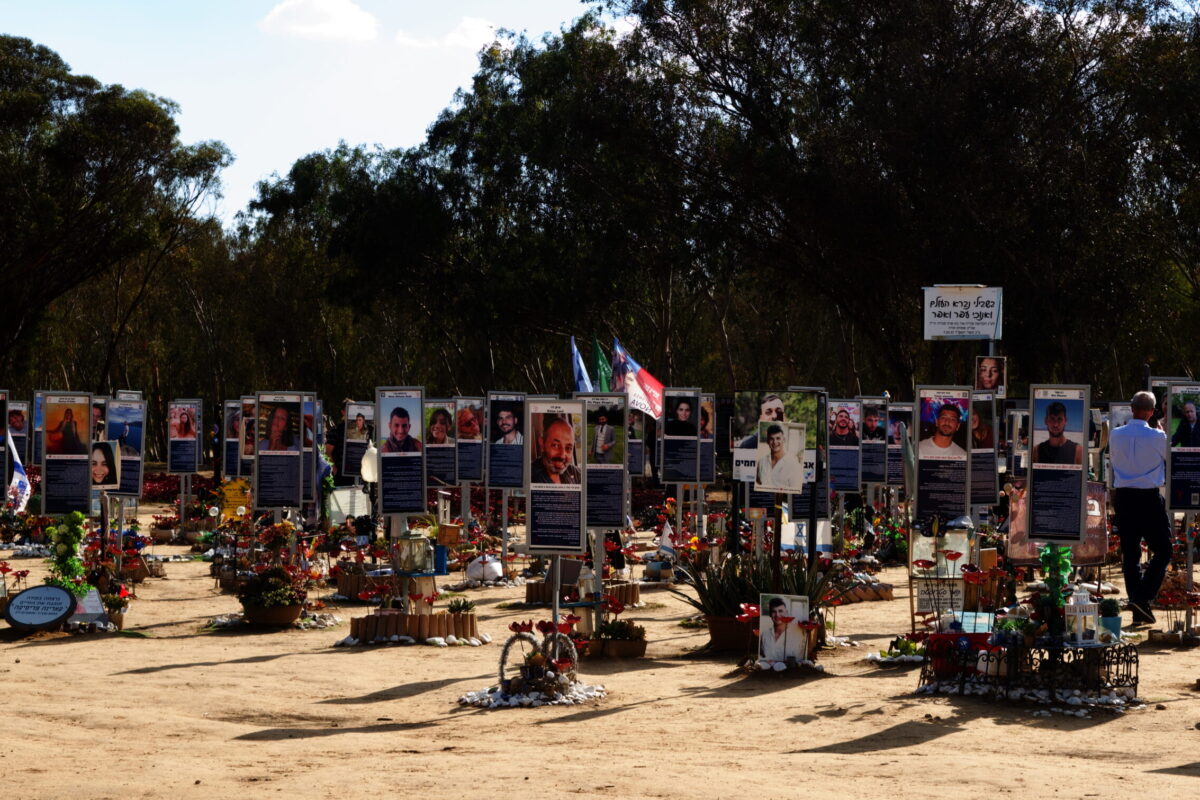
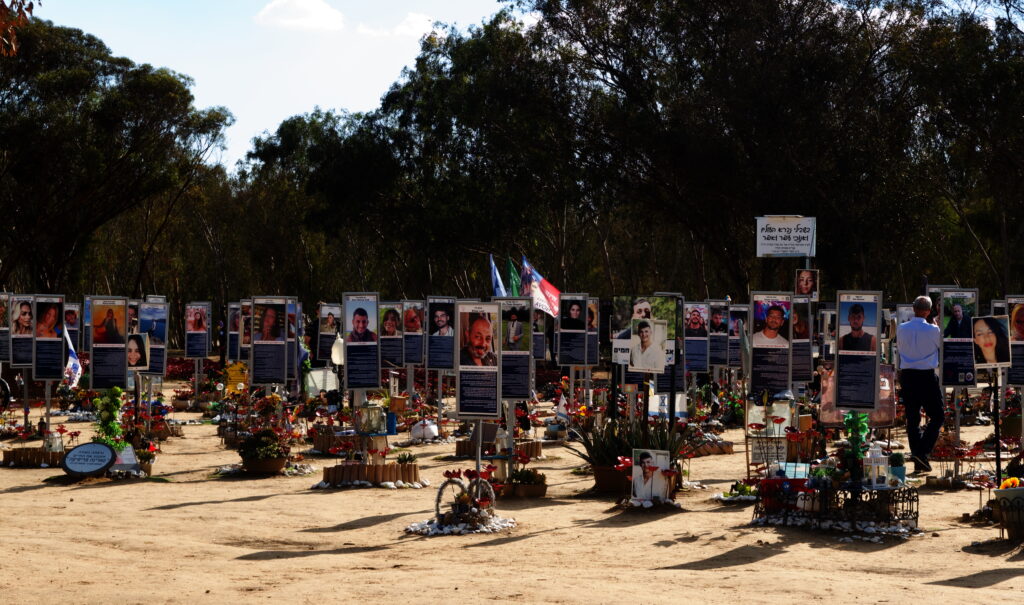
But this peaceful mood is deceptive. Israel is still traumatized by 7 October 2023, which is particularly evident when you visit the site of the Nova Festival, where Hamas and its helpers from Gaza brutally murdered over 400 festival participants who were celebrating peacefully together.
Each one of these almost invariably young people is commemorated by a sign attached to a pole with the name and photo of the person or people murdered. The pictures show happy, carefree, smiling faces. But they are all the faces of the dead. This is how a former festival site became a memorial, and thousands of Israelis and foreign visitors make a pilgrimage there every day.
Mazal is one of the survivors. She also returns to this place every week to visit her friends Danielle and Yochai, who were shot in the back left and right of her as she fled. Minute by minute, she describes that day, her escape, her survival. It is a tale of horror. “It was only the thought of my nine-year-old son that allowed me to survive,” says the thirty-three-year-old.
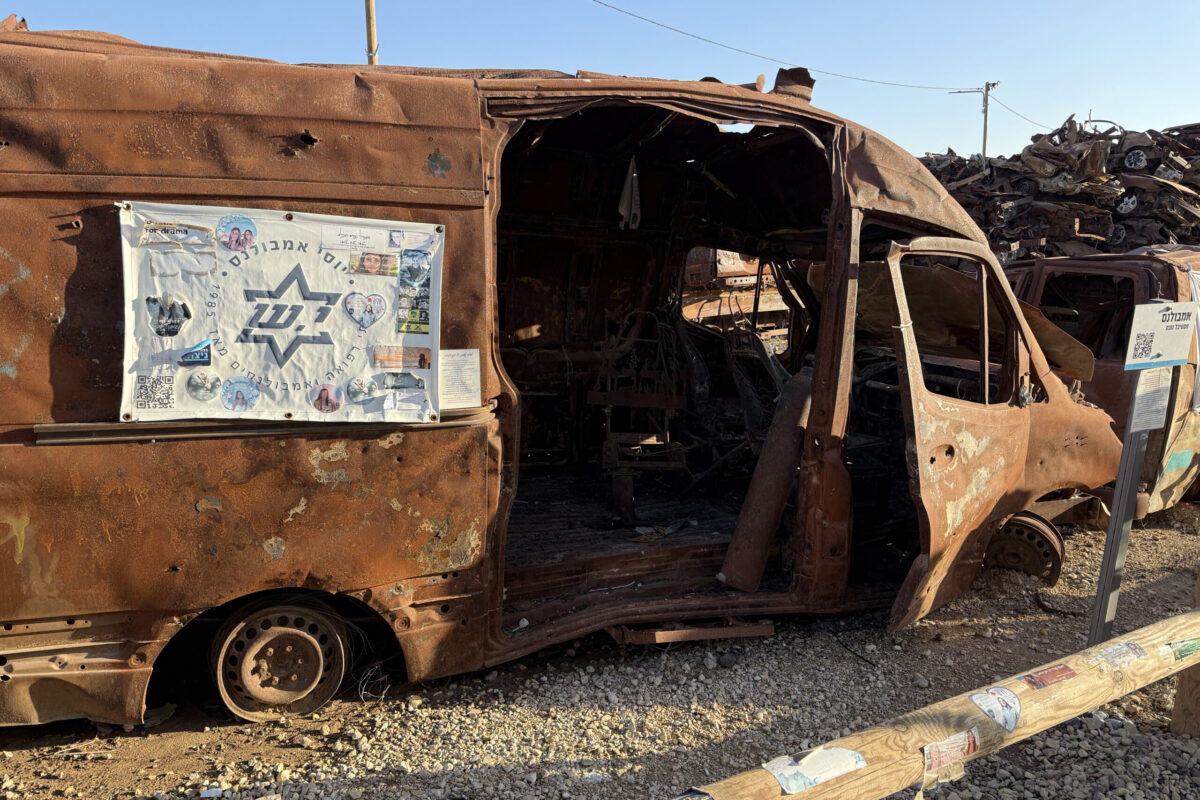
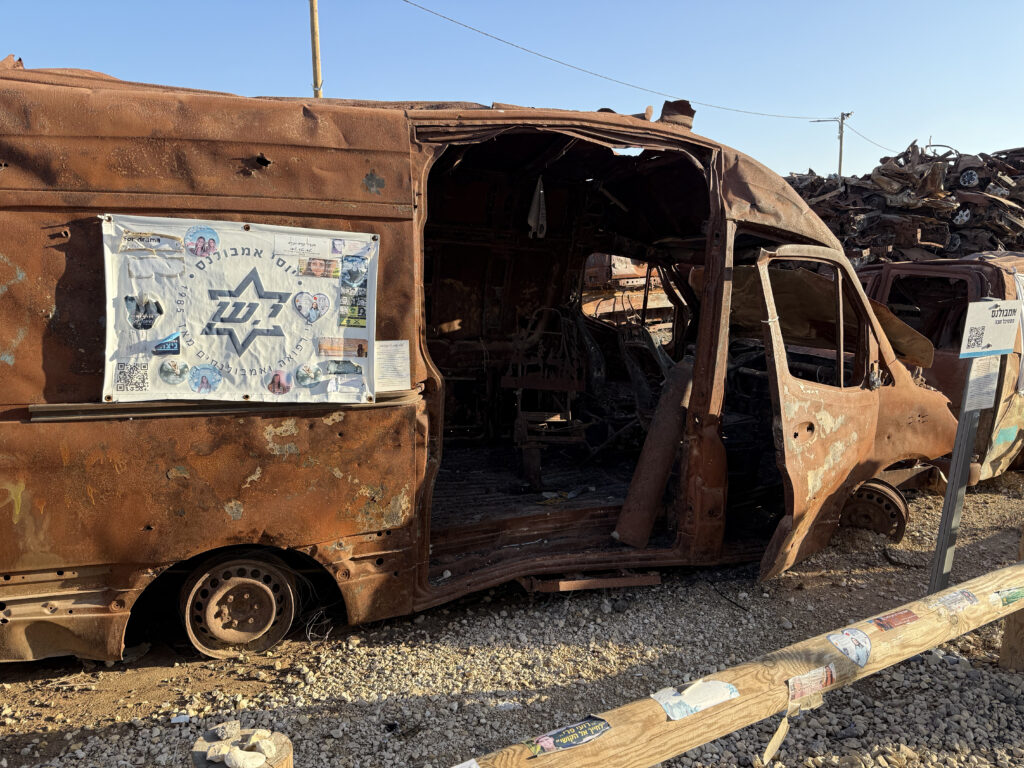
Just a few kilometers away, in Tekuma, the hundreds of cars shot at and subsequently set on fire by Hamas on October 7 are being stored. To ensure that the occupants burned to death, the terrorists doused the cars with a liquid that generated such a high temperature that even human flesh ignited. As a result, all that remained of many of the victims were ashes. Many Israelis also make a pilgrimage here every day to commemorate their dead.
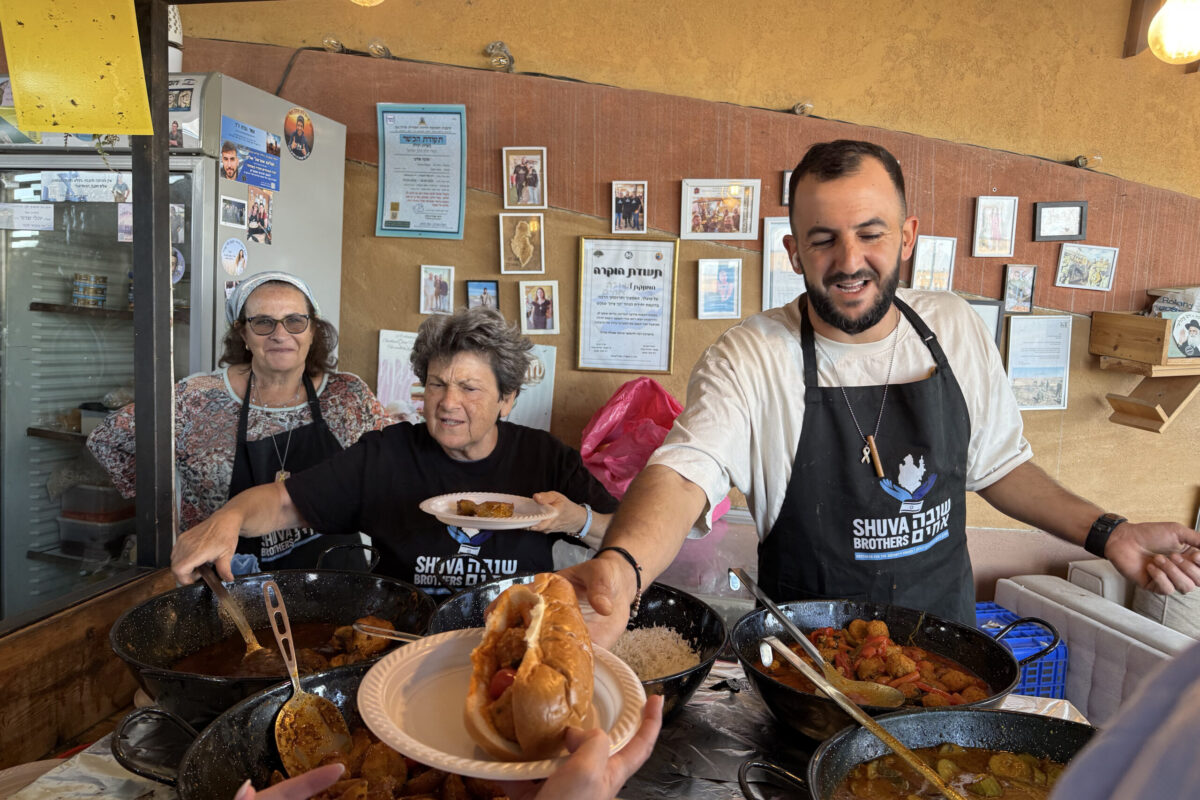
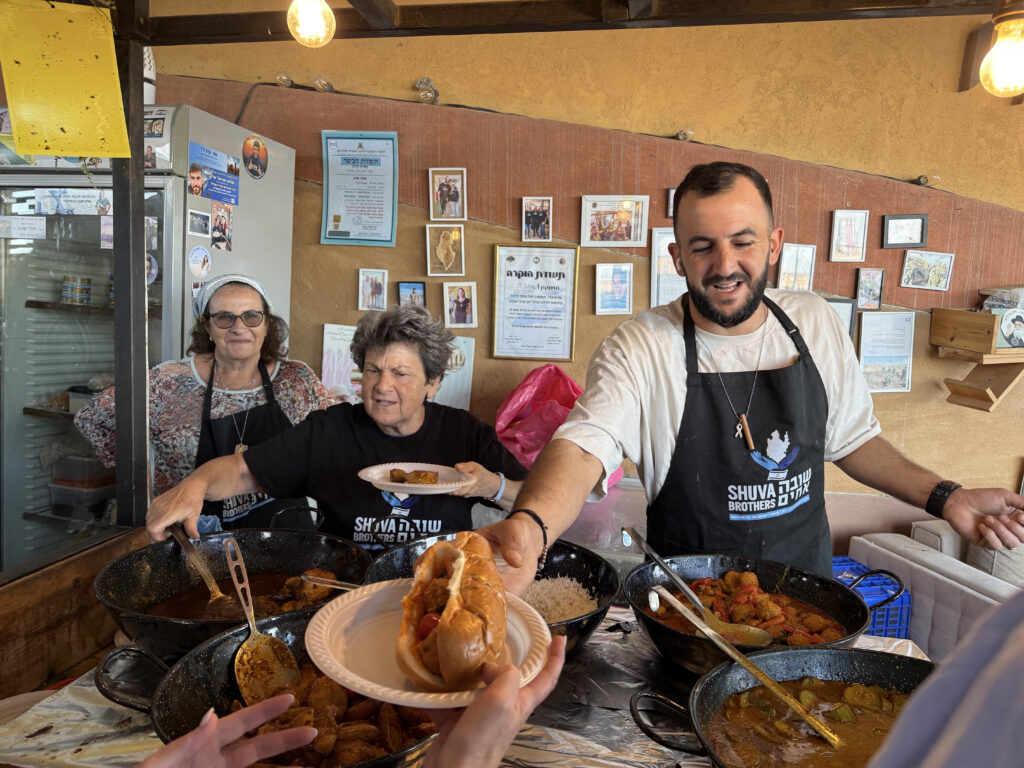
The population’s undiminished sympathy for the horror of October 7 is also expressed in other ways. For example, in the wooden street bar of the “Shuva Brothers”. They are actually called Dror, Eliran and Kobi Trabelsi and come from Shuva, a moshav (communal settlement) inhabited by religious Jews.
On the evening of October 7, the three brothers began serving coffee and water to the security forces and army personnel at a road junction near their village not far from the Gaza Strip. Today, they distribute over 3,000 home-cooked meals a day to soldiers stationed in Gaza and the border area who stop for a rest and to passing travelers. Free of charge, financed by donations from all over the world.
It is unlikely that the Shuva Brothers will stop their voluntary service any time soon. After all, very few Israelis believe that the war against Hamas in Gaza and Hezbollah in southern Lebanon is over for good.
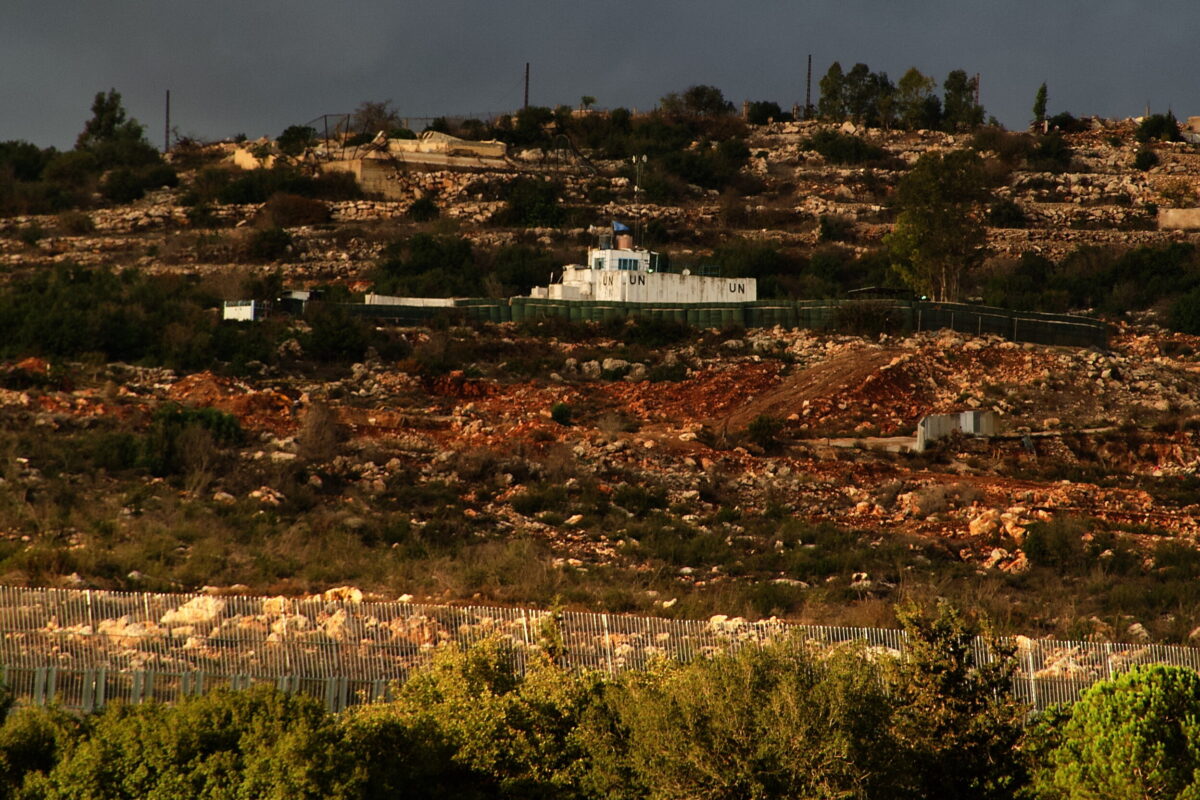
US President Donald Trump’s peace plan does provide for an international stabilization force to disarm Hamas and demilitarize Gaza. And in the north, the Lebanese government has pledged to take away the weapons of the local terrorist militia Hezbollah. But in Israel there is no illusion that this will happen. The prevailing opinion is that both will only come about if the Israeli army does it.
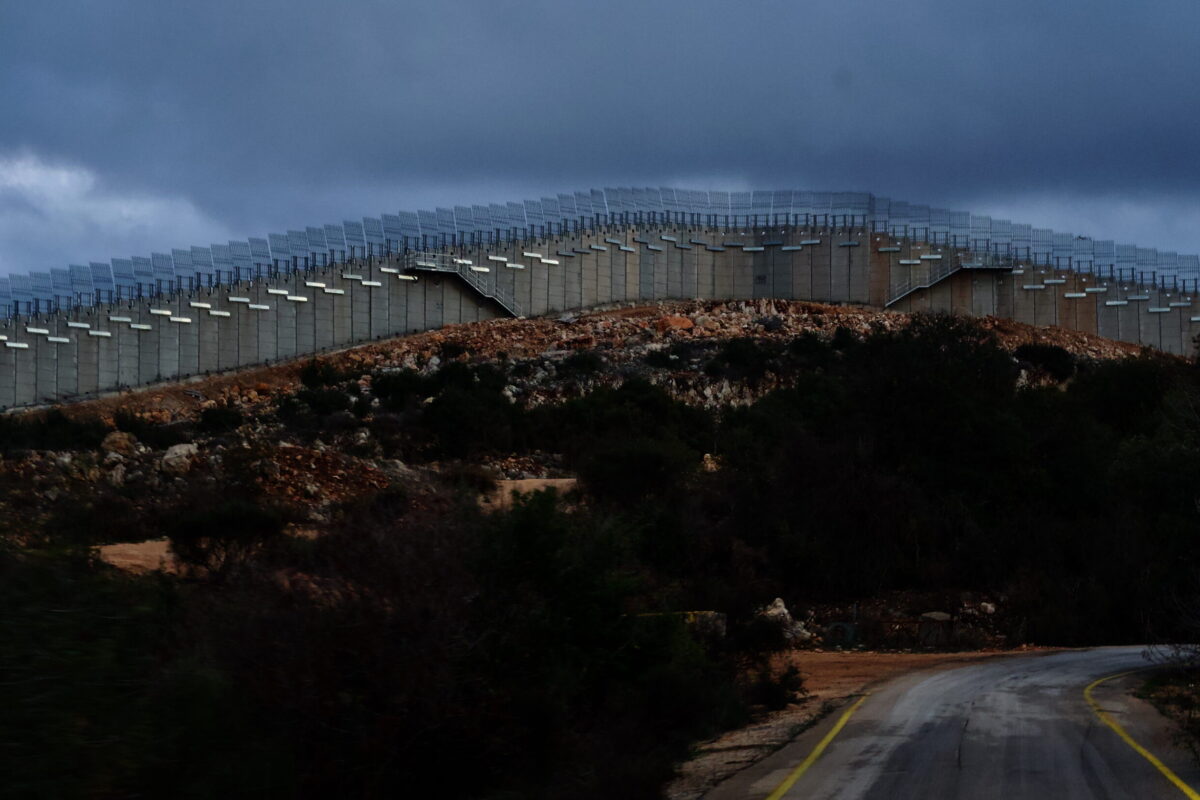
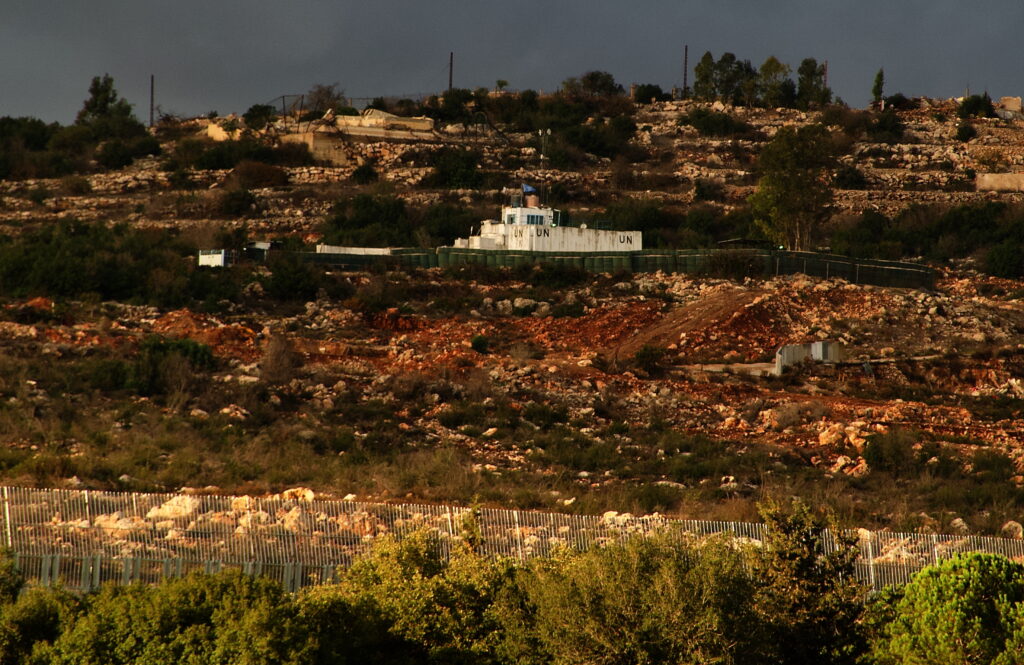
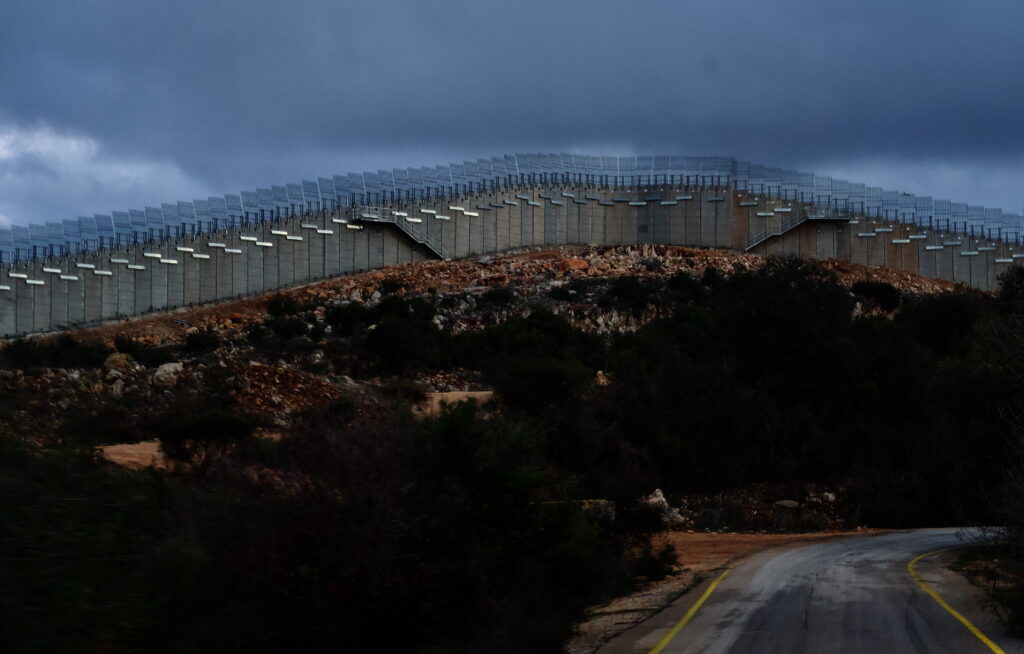
This is illustrated by the conversation with Sarit, the security officer in Za’rit, and with Yoram in Shtula, a small moshav that is also located on the border with Lebanon. On October 7, 2023, he had stayed behind in his village with 11 others to defend it in anticipation of an attack by Hezbollah. The rest of the population was evacuated. But that’s exactly how it sounds when you talk to Israelis in the big cities in the center of the country or to residents in the south near the border with Gaza.
“In five months, we will go to war again,” says the government’s former National Security Advisor, Yaakov Amidror, at the meeting in Tel Aviv. That is when it becomes clear that the second phase of the Trump plan remains a theory and Hamas is still ruling and terrorizing Gaza.
The fact that the removal of Hamas from power is essential is currently the only common denominator among the Israeli population. Otherwise, the Jewish state is divided like never before in its not quite 80-year history.
Every Saturday evening, after the end of Shabbat, demonstrations take place in Tel Aviv, Haifa and the other major cities in the country. So far, the demonstrations have also been about the last dead hostages who have not yet been handed over to Israel by Hamas. Above all, however, the demonstrations are against the government of Prime Minister Benjamin Netanyahu and his far-right coalition partners Itamar Ben-Gvir and Bezalel Smotrich
The demonstrations began months before October 7, 2023, as protests against the government’s planned judicial reform. The aim of this reform is to disempower the Supreme Court and reduce the influence of the judicial system on politics as a whole. As Israel does not have a written constitution, the judiciary and the Supreme Court in particular are much more important than, for example, the Federal Supreme Court in Switzerland.
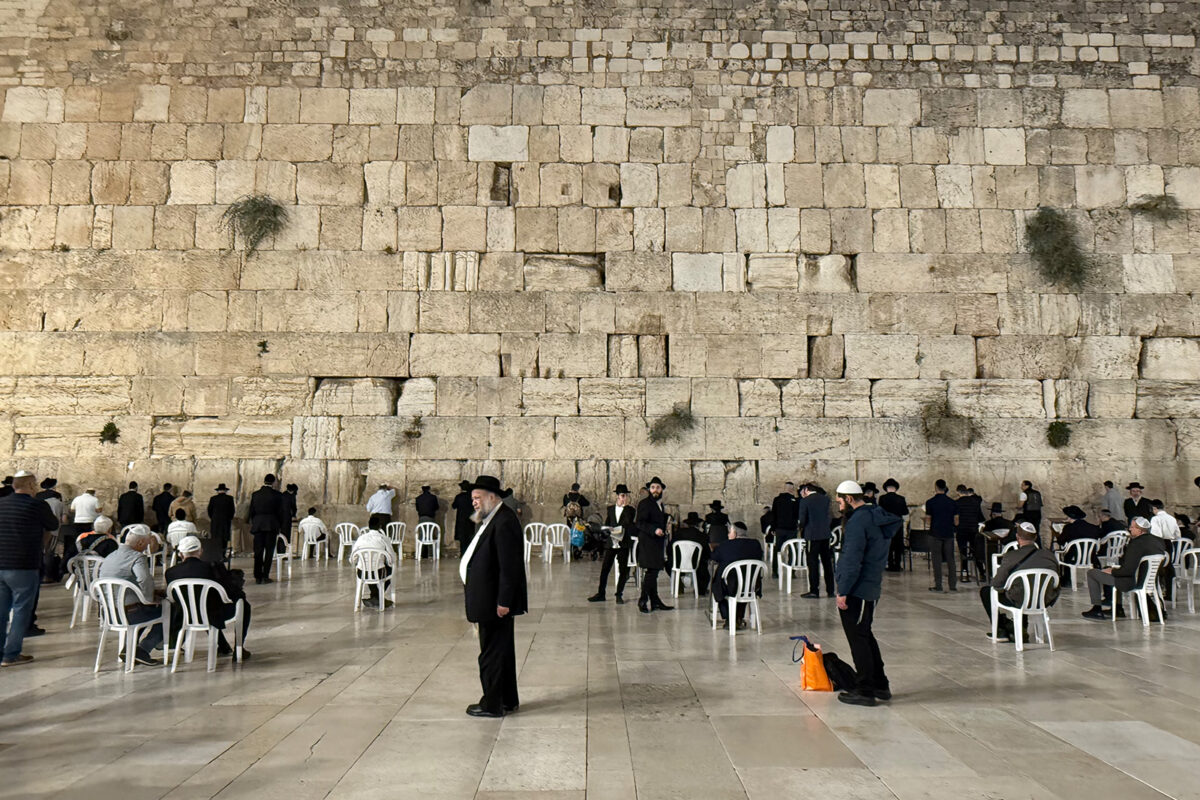
The protests on the streets of Israel’s major cities are also directed against the exemption of ultra-Orthodox Jews (Haredim) from military service. This issue is now particularly topical again because the government presented a law a few days ago that would oblige the Haredim to serve in the Israeli army, the IDF. The Supreme Court had already obliged them to do so in 2024.
However, the law that has now been presented in no way reflects the will of the court at the time. It does purport to order compulsory service for Haredim. At the same time, however, it contains numerous provisions that guarantee de facto impunity for those ultra-Orthodox who do not comply with the call-up order. It is therefore a typical toothless paper tiger.
Prime Minister Netanyahu only agreed to this bill in order to secure the continued support of the Haredi parties and save his coalition government. However, it is uncertain whether he will succeed in doing so and whether he will find a majority for the law in parliament (Knesset). Not only the opposition parties are up in arms against the bill, but also members of Netanyahu’s own Likud party have already publicly declared that they will not support the law in its current form.
Secular Israelis, who make up just over 40 percent of the population, are particularly outraged by the bill. But many national-religious Israelis are also against it and are therefore angry with their own parties. This is because these Zionist-minded religious Jews are also doing military service together with the secular Israelis and are bearing the entire burden of the war together with them.
The exemption of the Haredim from military service outrages secular Israelis all the more because the state supports the ultra-religious, who make up only around 14 percent of the population, with huge sums of money every year at their expense and with their tax money.
The army is also not served by the “sham conscription law”. Due to the looming continuation of the war against Hamas and Hezbollah, it would urgently need the 80,000 to 100,000-strong reserve force of ultra-religious people of serving age.
The people of Israel are united in their trauma and grief over October 7 and in their disillusioned expectation that the war will soon continue. But politically, it is deeply divided.
It is not so much a rift between left and right that is dividing the country, as some in the right-wing Likud party also reject their far-right government partners Smotrich and Ben-Gvir. Above all, there is a rift between secular and ultra-religious Israel. The question at stake in the next elections in October 2026 is therefore not whether the left or the right will win. The question is: will Israel remain a progressive, Zionist, democratic (successful) project? Or will the Jewish state gradually return to the biblical era over the next few decades?
Sacha Wigdorovits is President of the Fokus Israel und Nahost association, which runs the website fokusisrael.ch. He studied history, German and social psychology at the University of Zurich and has worked as a US correspondent for the SonntagsZeitung, was editor-in-chief of BLICK and co-founder of the commuter newspaper 20minuten.



Have you discovered an error?